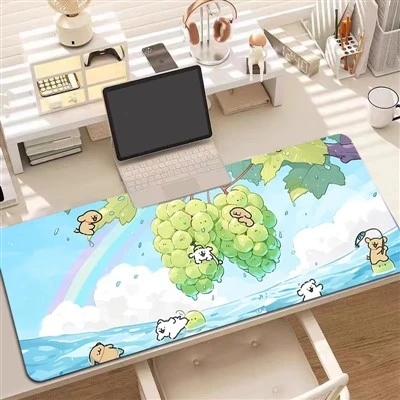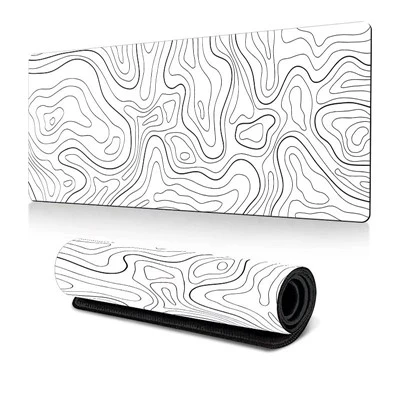

In the second half of 2026, three rubber and plastics consumer goods sectors-mouse pads, yoga mats, and door mats-are emitting clear market signals. From consumption upgrades to material transformation, from functional innovation to aesthetic reinvention, each segment is undergoing profound structural change. For manufacturers, understanding these trends is key to capturing order opportunities.
Mouse Pads & Desk Mats: Approaching a $10 Billion Market, Driven by Performance and Health
The global mouse pad and desk mat market reached $6.83 billion in 2025 and is projected to grow to $9.88 billion by 2032, at a CAGR of 5.5%.
Growth is powered by three vectors: ergonomic needs from remote work, high-performance demand from the booming esports industry, and rising consumer interest in personalization and eco-friendly materials. North America remains the largest market; Europe shows strong interest in ergonomic designs; and Asia-Pacific-especially China and India-is the fastest-growing region, fueled by large digital workforces and gaming communities.
Product segmentation is accelerating, spanning gaming pads, non-slip pads, ergonomic designs, and wrist-rest models for office, gaming, and professional use.
Key takeaway for manufacturers: A plain rubber-cloth surface no longer suffices.
Quantifiable "feel" metrics, differentiated features like antimicrobial coatings and washability, and customization capabilities are becoming core competitive advantages.
Yoga Mats: Green Material Revolution Accelerates, Global Market Climbs Steadily
The yoga mat market is undergoing a material-driven structural upgrade. Consumers are increasingly favoring eco-friendly options made from natural rubber, TPE, and cork over traditional PVC-driven by stricter EU regulations and rising safety expectations for skin-contact products.
The competitive landscape includes premium brands targeting serious practitioners and eco-conscious consumers, as well as emerging players competing on value and niche strategies (e.g., travel-friendly mats, custom designs). Brand innovation focuses on enhanced grip, ergonomic alignment guides, and sustainable materials.
Industry analysis emphasizes that sustainability must be treated as a design and supply chain discipline-not a marketing slogan-encompassing renewable materials, recycled content, restricted substances, packaging reduction, take-back programs, and credible certifications. Hygiene-related innovations-easy-clean surfaces, odor control, moisture resistance, and durability under repeated disinfection-are particularly important for commercial buyers (gyms, hotels).
Key takeaway for manufacturers: Material choice is now a core competitive moat. Natural rubber and TPE are high-growth segments with CAGRs exceeding 10%. Products that are safe, odor-free, and backed by a credible sustainability story command stronger competitiveness and pricing power in international markets.
Door Mats: From Utility to Entryway Aesthetics
The door mat's role is being redefined-from a simple dirt-trapping rubber sheet to a home's first impression and the transition zone between indoors and outdoors. In early 2026, an anti-slip door mat featuring abstract mosaic art print achieved remarkable sales of 70,000 units, becoming a phenomenal hit.
This success reveals the sector's core formula: "democratized art + high value-for-money." The abstract mosaic patterns avoid conflicts with existing home decor while injecting a gallery-like, designer aesthetic-giving consumers a tasteful decorative piece at minimal cost. Combined with an aggressive price point, the purchase decision became effortless.
Key takeaway for manufacturers: Competition in door mats is shifting from pure "functionality" to a dual-driver of "design + function." The ability to differentiate on aesthetics, respond quickly to custom printing/color/size requests, and offer competitive pricing while maintaining quality is key to winning in the home decor market.
Industry Undercurrent: Involution vs. Breakthrough
China's rubber and plastics industry is in a structural adjustment phase. 2025 data shows plastic products revenue of RMB 2.2 trillion, down 2.9% year-on-year, with profits falling 7.7%. The core contradiction: severe homogenized competition in low-end products coexists with high import dependence for premium materials (high-performance resins, specialty rubbers).
The industry's direction is clear-green, high-end, and smart. At CHINAPLAS 2026, over 1,000 "SRDI" enterprises (including nearly 200 national-level "Little Giant" companies) showcased the upgrade roadmap. Meanwhile, geopolitical factors-such as Strait of Hormuz shipping disruptions-caused significant raw material price volatility in Q1, making "supply chain stability" a central industry concern. The event attracted over 430 buyer delegations (including 70+ overseas groups), underscoring global reliance on China's rubber and plastics supply chain stability.