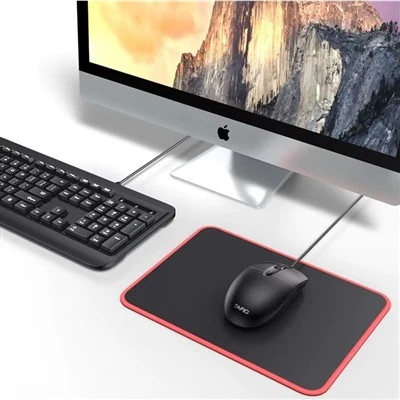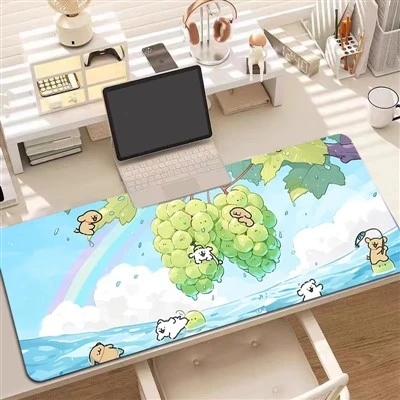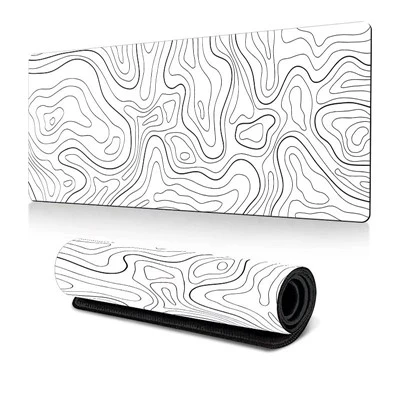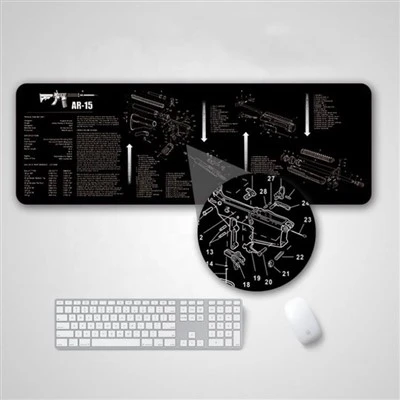

From the smooth glide of a mouse pad to the stable support of a yoga mat and the lasting durability of a door mat-everyday rubber and plastic products are undergoing a quiet revolution driven by materials science. In 2026, this industry is no longer just about "rubber plus plastic"; it has evolved into an interdisciplinary field blending ergonomics, green technology, and smart manufacturing.
Mouse Pads: From Accessory to Esports-Grade Performance Gear
Driven by esports and remote work, the mouse pad has become a critical tool for productivity and gaming performance.
The global mouse pad market was valued at approximately $520 million in 2024 and is projected to reach $944 million by 2035, at a CAGR of 5.2%. Consumers now scrutinize glide resistance, tracking precision, and surface consistency-metrics once reserved for pro gamers.
Natural rubber bases with fabric surfaces remain the mainstream choice, while low-friction coatings, antimicrobial treatments, and washable designs are emerging as premium differentiators. For manufacturers, the ability to quantify "feel" is key to capturing both gaming and office segments.
Yoga Mats: From Cushion to Health Investment
The yoga mat has evolved from a simple exercise accessory into a carrier of healthy lifestyles. Consumers now demand eco-friendly, odor-free materials, precise joint protection, and even antibacterial self-cleaning properties.
The global yoga mat market was valued at approximately $9.88 billion in 2025 and is projected to reach $15.35 billion by 2034, at a CAGR of 4.5%. North America holds 36% market share, while Asia-Pacific is the fastest-growing region at 12.8% CAGR.
Natural rubber, TPE, cork, and jute are rapidly replacing traditional PVC, driven by stricter EU regulations and rising consumer safety expectations. Closed-cell foam technology-offering sweat resistance and easy cleaning-is becoming the preferred choice for both gyms and home users.
Door Mats: From Utility to Entryway Aesthetics
The humble door mat is being revalued as a design statement and a transition zone between indoors and outdoors.
Minimalist, Nordic, and Wabi-Sabi interior trends have elevated design and texture as key purchase considerations. Natural coir, recycled rubber, and textured EVA foams are bringing new aesthetic expressions to this category. Meanwhile, commercial sectors-hotels, malls, offices-are demanding modular designs, custom logos, and enhanced flame-retardant grades, pushing manufacturers toward flexible customization capabilities.
The Underlying Logic: Why Materials Innovation Is the Only Moat
Across mouse pads, yoga mats, and door mats, one truth holds: a product's ceiling is defined by the performance limits of its materials.
Three technological trajectories are shaping 2026:
Green: Bio-based materials, recyclability, and low-carbon processes are moving from "nice-to-have" to "must-have" as global plastic governance tightens.
Functional: Antimicrobial, anti-mold, flame-retardant, and anti-static additives enable products to serve medical, food-contact, and children's safety applications.
Smart: Intelligent sensing and quality control systems ensure batch-to-batch consistency-critical for international OEM/ODM partnerships.
About Cixi Mingsheng Rubber & Plastics Co., Ltd.
Founded in 2003 and headquartered in Cixi, Zhejiang, Mingsheng is a comprehensive manufacturer specializing in the R&D and production of rubber and plastic products. Our core offerings include mouse pads, bar mats, floor mats, yoga mats, and various foamed products. We serve a diverse global clientele with integrated services from product design and manufacturing to export.